Develop oxzep7 software is becoming an important topic for modern developers who want to build advanced and scalable digital systems. This process focuses on software development, system architecture, and application design that work smoothly across different platforms. It helps developers create strong, efficient, and user-friendly solutions for real-world problems in today’s fast-moving tech industry.
Many learners and professionals want to understand how software engineering, coding frameworks, and backend development work together in one system. The idea behind this process is simple but powerful, as it improves performance optimization, security integration, and overall system reliability. With the right approach, even complex software becomes easier to build and manage effectively.
This topic also highlights the importance of user experience, technical workflow, and scalable systems in modern development. Developers focus on clean coding practices and efficient programming to ensure smooth performance. Strong planning and structured development make the entire process more reliable, flexible, and future-ready for different digital needs.
What is Oxzep7 Software?
Oxzep7 is a cutting-edge cross-platform framework designed to automate enterprise data workflows in 2026. It serves as a centralized hub for cloud computing tasks, helping teams build data-driven applications faster. This software suite eliminates manual tech hurdles by connecting different databases into one smooth, highly efficient digital ecosystem.
The core technology relies on machine learning algorithms to process complex background information in real time. It provides a flexible software development kit that adapts to changing business demands. By prioritizing system interoperability, it bridges gaps between old infrastructure and modern digital tools perfectly.
Ultimately, this computing platform focuses on maximizing efficiency and lowering infrastructure overhead. Businesses utilize it to achieve digital transformation goals without rewriting their entire codebase. It offers a fresh, modern approach to managing high-volume data streams securely across global corporate networks.
Key Features of Oxzep7 Software
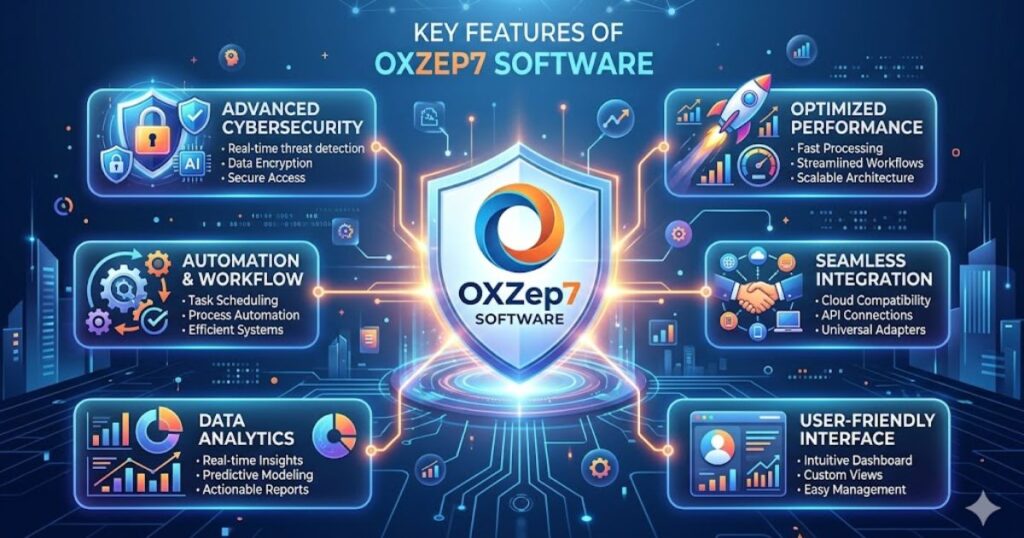
The main appeal of this system lies in its advanced predictive analytics engine and automated systems. Developers can deploy containerized applications instantly across various cloud providers without manual configuration. It also features built-in end-to-end encryption protocols that secure sensitive user records from external digital threats.
- Real-time analytics process live data streams instantly for immediate operational insights and decision-making.
- Automated cloud backup secures your critical system files against unexpected hardware or network failures.
- Intuitive user dashboard simplifies complex system monitoring with clear visual graphs and live metrics.
- Role-based access control protects sensitive company data by limiting user permissions based on job roles.
- Smart API throttling prevents server overloads during peak traffic times to ensure maximum uptime.
- Multi-language localization allows global teams to operate the software interface in their preferred native tongue.
Additionally, the software includes a visual low-code interface for rapid prototyping and deployment. This empowers non-technical teams to create basic automation scripts without writing deep backend code. It significantly reduces the overall development lifecycle and speeds up project delivery times.
System Requirements for Development
Engineers need specific hardware configurations to efficiently develop oxzep7 software in professional environments. The local development environment demands modern processors with high multi-threading performance to compile code quickly. Proper allocation of hardware resources prevents system lag and keeps your programming workflows moving at a steady pace.
| Component | Minimum Specification | Recommended Specification |
| Processor (CPU) | 6-Core 3.5 GHz | 8-Core 4.2 GHz or higher |
| Memory (RAM) | 16 GB DDR4 | 32 GB DDR5 |
| Storage (SSD) | 512 GB NVMe | 1 TB NVMe |
| Network | 100 Mbps broadband | 1 Gbps fiber connection |
Your workstation should run a current operating system like Linux, Windows, or macOS. Adequate storage space on an NVMe solid-state drive ensures rapid file access during heavy data compilation tasks. Having these baseline specifications ready prevents common bottlenecks during the initial technical setup phase.
Tools and Technologies Used
Building this ecosystem requires a mix of modern programming languages and compiler tools. Developers rely heavily on runtime environments that support asynchronous tasks to handle concurrent user requests efficiently. Specialized debugging utilities and package managers help keep the external software dependencies organized and completely secure.
- Docker containerization ensures consistent application behavior across different testing and live production environments.
- TypeScript programming adds strict typing to JavaScript code for fewer runtime errors during deployment.
- GraphQL API query allows frontend applications to request the exact data needed without over-fetching.
- Git version control tracks source code changes and enables smooth collaboration among distributed engineering teams.
- Redis cache memory accelerates data retrieval speeds by storing frequently accessed database queries in RAM.
- Jest testing framework automates unit tests to catch software bugs before code reaches production servers.
The visual layout depends on modern frontend frameworks that render interface elements quickly on mobile devices. On the backend, robust relational database management systems store structured data without risking corruption. These integrated technologies work together to create a highly responsive and thoroughly stable user experience.
See more : Python 54AXHG5: Complete Guide to Features, Installation, Uses, and Troubleshooting
Planning the Software Architecture
Creating a solid blueprint requires deep knowledge of microservices architecture and data distribution patterns. Engineers must map out every data ingestion pipeline to prevent bottlenecks during high-traffic events. Designing clean boundaries between different system components ensures that future software updates will not break existing features.
The planning stage heavily focuses on system scalability and minimizing server response latencies globally. Teams construct detailed entity-relationship diagrams to organize how database tables interact with each other safely. This careful preparation prevents technical debt and keeps the code maintainable for long-term project growth.
Choosing the right design patterns allows the system to scale smoothly as user demand increases. It establishes a strong foundation that supports continuous integration and automated deployment workflows over time. Ultimately, a well-planned structural design guarantees a highly resilient platform that performs exceptionally under heavy workloads.
Step-by-Step Installation Process
Setting up the system requires initializing the core repository within your local command-line interface. Developers must fetch the latest dependencies using a verified package manager to prevent environment conflicts. Ensuring your environment variables are configured correctly sets a stable foundation for the upcoming software initialization steps.
- Clone the repository from the official corporate version control platform to your local development workspace.
- Install project dependencies by executing the package manager install command in your terminal application.
- Configure environment files by copying the provided template and entering your local system credentials.
- Run database migrations to automatically generate the required database schema, tables, and default indexes.
- Seed initial data into the database to populate essential system settings and administrative user roles.
- Launch development server by running the start script to verify the application is fully operational.
Next, you will configure the local environment file with your specific database credentials. Run the automated setup script to generate your secure encryption keys and build the initial database tables. This automated process ensures that all system dependencies align perfectly before you start the local server.
Backend Development Overview
Building the server-side environment requires creating scalable RESTful API endpoints to process incoming client requests. Developers utilize structured server-side scripting to handle business logic and manage data validation rules securely. This architecture isolates core computing processes from the user interface to ensure maximum backend performance.
The system relies on asynchronous event-driven architecture to manage background tasks without blocking user traffic. By implementing efficient middleware functions, the application handles authentication, logging, and data parsing smoothly. This keeps the backend highly responsive even during intensive data processing cycles.
Ultimately, engineers must optimize the server performance by implementing query caching and connection pooling strategies. To efficiently develop oxzep7 software, teams must ensure the backend handles high-concurrency workloads without crashing. This structural design guarantees data integrity across all connected third-party enterprise services.
Frontend Development Guide
The user interface relies on component-based architecture to deliver a responsive, highly dynamic user experience. Developers build reusable interface elements that update automatically when underlying application state changes occur. This modern approach ensures rapid browser rendering and keeps the interface feeling quick and fluid.
- Initialize frontend framework within the root project directory to establish the client-side workspace environment.
- Configure global router to manage page navigation and handle user redirects based on authentication.
- Build reusable components like buttons, input forms, and data tables to maintain UI consistency.
- Integrate API client to fetch data from the backend server using secure asynchronous network requests.
- Implement state management to track user sessions, theme preferences, and temporary application data storage.
- Run production build to optimize, compress, and minify the code files for faster loading speeds.
Managing global data requires a centralized state management library to synchronize information across different visual views. The application utilizes modern styles to achieve a completely responsive layout across desktop and mobile screens. This ensures seamless visual continuity regardless of the device your audience uses.
Database Integration Process
Connecting the storage layer requires setting up a robust object-relational mapping system to translate code into queries. Engineers establish secure connection pools to manage database traffic efficiently without draining server memory. This layer acts as the foundation for all persistent data storage and retrieval tasks.
| Database Task | Primary Objective | Key Benefit |
| Schema Migration | Track structural database alterations | Ensures version consistency across teams |
| Index Optimization | Speed up data retrieval queries | Reduces server CPU utilization significantly |
| Connection Pooling | Manage active database connections | Prevents server crashes during peak traffic |
| Data Replication | Duplicate records across backup servers | Guarantees high availability and recovery |
Data engineers write specific migration files to track structural changes to the database schema over time. They implement indexing strategies on frequently queried columns to accelerate search performance and reduce server load. This preparation guarantees that complex data filtering requests execute in milliseconds.
Security and Data Protection
Safeguarding user information requires implementing a strict zero-trust security model across all network layers. The application enforces multi-factor authentication to verify user identities before granting access to confidential company records. This strategy effectively neutralizes standard credential theft techniques and unauthorized login attempts.
All data moving across the network uses advanced transport layer security protocols to block interception. At rest, data is protected using industrial-grade cryptographic standards that render stolen files completely unreadable. Regular vulnerability scanning ensures the system remains safe from newly discovered digital exploits.
Furthermore, automated systems track server access logs to detect and flag suspicious user activity instantly. Developers write strict data validation rules to block malicious code injection attacks at the API gateway. This comprehensive approach keeps your digital assets safe while meeting global data privacy compliance laws.
FAQ’s
Q1: What is the main purpose of Oxzep7?
Oxzep7 is an advanced cross-platform framework designed to automate enterprise data workflows and build scalable, data-driven applications seamlessly.
Q2: Who should develop oxzep7 software?
Enterprise engineering teams and digital agencies should develop oxzep7 software to optimize complex workflows and maximize system scalability.
Q3: Is it difficult to develop oxzep7 software?
No, developers with experience in standard programming languages can easily develop oxzep7 software using its flexible software development kit.
Q4: What hardware is required to develop oxzep7 software?
To efficiently develop oxzep7 software, engineers need a workstation equipped with an 8-core processor and 32 GB of RAM.
Q5: Can small businesses develop oxzep7 software?
Yes, small businesses can develop oxzep7 software using its low-code interface to accelerate digital transformation without heavy infrastructure costs.

James Dean was an American actor and cultural icon of teenage rebellion, best known for Rebel Without a Cause, Giant, and East of Eden.