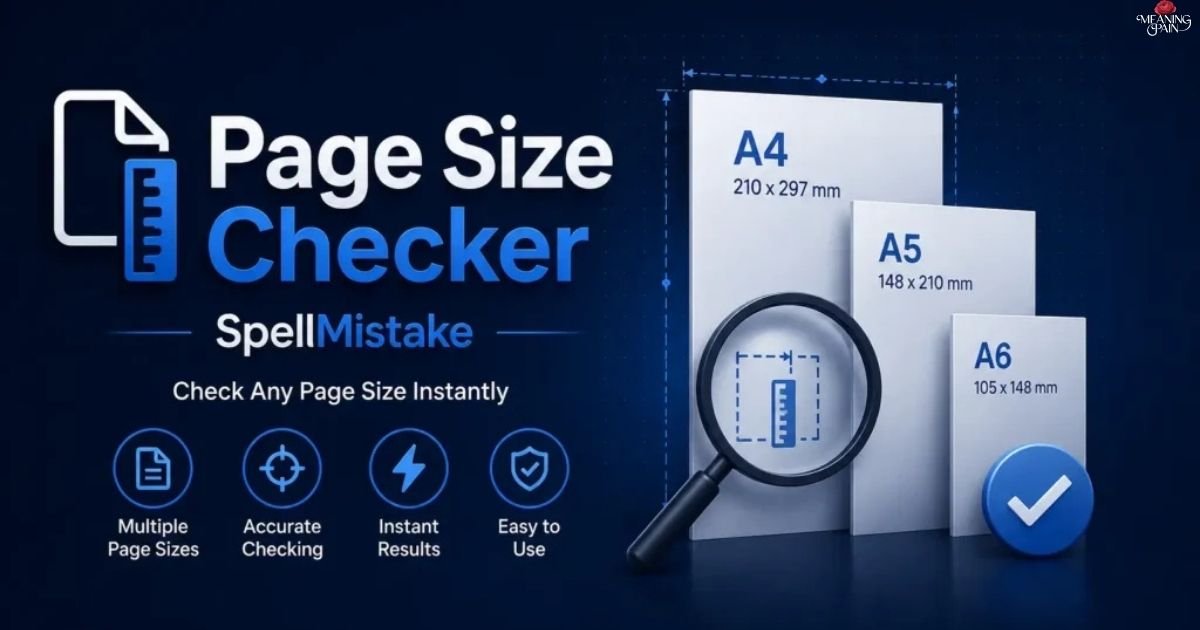
A page size checker spellmistake is a frequent search issue that occurs when users enter incorrect variations while looking for website analysis tools. A page size checker helps measure the complete size of a webpage by examining elements such as images, scripts, HTML, and other resources. This information is valuable for improving website speed, technical SEO, and overall user experience. Even minor spelling errors can prevent users from discovering the correct tools and valuable optimization resources.
Many users accidentally search terms such as “page sise checker” or “page size chekcer,” which may produce unrelated results. These small typing mistakes can influence search accuracy, keyword performance, and content visibility. Using the correct term helps users find reliable tools faster while allowing website owners to analyze loading performance, file sizes, and technical issues more effectively.
A properly used page size checker helps identify unnecessary files, reduce webpage weight, and improve loading speed. Correct keyword usage combined with website optimization strategies can enhance search performance, improve crawlability, and create a smoother experience for visitors.
What is a Page Size Checker Tool?
A page size checker tool is an online service designed to calculate the total size of a webpage. Modern websites often contain large images, scripts, videos, fonts, and design elements that can increase page weight. This tool analyzes different webpage components, including HTML, CSS, JavaScript, media files, and other resources, to determine the overall size of a page.
Website owners, developers, and content creators use these tools to identify elements that slow down performance. Page size checker spellmistake, By understanding which files contribute most to page size, users can make improvements that increase website speed, strengthen technical SEO, and provide a better browsing experience.
In 2026, website performance has become more important than ever. A page size checker provides useful insights that help maintain faster websites, improve accessibility, and support better search engine performance.
Read More: Why Coyyn.com Business Is Becoming Popular in 2026
Why Page Size Matters for Website Performance
Page size checker spellmistake, Page size plays an important role in determining how quickly a website loads. Large webpages require more resources to download, which can create slower experiences for visitors. Since users expect fast-loading websites, excessive page weight can increase bounce rates and negatively affect engagement.
Search engines also consider website performance when evaluating pages. Reducing unnecessary files, optimizing media, and improving loading speed can support better rankings and improved user satisfaction.
A smaller page size allows websites to load efficiently on different devices, especially mobile phones with slower connections. Optimized pages improve usability, reduce server pressure, and help search engines crawl content more effectively.
Page Size Checker Tool Components Overview
A page size checker analyzes different elements that contribute to the total weight of a webpage. Page size checker spellmistake, Understanding these components helps website owners identify performance problems and apply suitable optimization methods.
| Component | Description |
|---|---|
| HTML | Provides the basic structure and content framework of a webpage |
| CSS | Controls the visual appearance, layout, and styling elements |
| JavaScript | Adds interactive features and website functionality |
| Images | Visual resources that often contribute significant page weight |
| Videos | Large media files that can increase loading requirements |
| Fonts | Typography resources that affect page size and rendering speed |
Page size checker spellmistake, By reviewing each component, users can determine which areas require improvement. Removing unnecessary files and optimizing important resources can lead to faster loading times, better SEO performance, and improved website efficiency.
Page Size Checker Spellmistake – Common Typing Errors Explained
Many people make spelling mistakes when searching for page size checking tools online. Common examples include “page sise checker,” “page size chekcer,” and “page size cheker.” These incorrect variations may prevent users from finding the right resources and can create confusion during online searches.
Accurate spelling helps search engines understand user intent and display more relevant results. For website owners, using correct keywords improves content visibility, search rankings, and organic traffic opportunities.
Page size checker spellmistake, Although search engines can sometimes understand misspelled terms, relying on incorrect keywords may reduce effectiveness. Proper keyword usage ensures better communication between users, websites, and search platforms.
How to Correct “Page Size Checker” Spelling for SEO
Page size checker spellmistake, Using the correct spelling of “page size checker” is essential for maintaining strong SEO performance in 2026. Search engines rely on accurate keywords to understand content and provide relevant results to users. Incorrect spelling can reduce visibility, affect keyword targeting, and prevent content from reaching the intended audience. Proper use of keywords in titles, headings, descriptions, and website content helps improve rankings and online discoverability.
Page size checker spellmistake, Website owners should carefully review spelling before publishing any content. Even small keyword errors can affect organic traffic, search engine understanding, and overall SEO effectiveness. Maintaining accurate spelling improves indexing, content relevance, and a website’s digital presence across search platforms.
Check Spelling Before Publishing Content
Checking spelling before publishing helps prevent keyword errors, search confusion, and unnecessary SEO issues. Accurate content improves readability and allows search engines to better understand website information.
- Review important keywords before publishing articles to ensure correct usage and improve search visibility.
- Use spelling-checking tools to verify accuracy in headings, meta descriptions, and SEO-focused content.
- Check target keywords carefully to avoid losing ranking opportunities and organic search traffic.
- Edit and proofread content regularly to remove mistakes that may affect keyword performance and user experience.
Use SEO Tools for Keyword Accuracy
Page size checker spellmistake, SEO tools help website owners identify correct keyword usage and improve content optimization. These tools provide valuable insights that support better ranking opportunities and search engine visibility.
- Use keyword research tools to confirm accurate spelling and improve targeting for relevant search queries.
- Analyze keyword suggestions to maintain consistency throughout website pages and blog content.
- Review search data to identify correct keyword variations and avoid traffic losses caused by spelling mistakes.
- Apply SEO software recommendations to strengthen keyword placement and improve content performance in competitive markets.
Compare Common Misspellings
Analyzing common spelling mistakes helps identify incorrect keyword usage and improves overall content accuracy. Understanding how users type search terms allows website owners to optimize content more effectively.
- Compare incorrect keyword variations with the correct phrase to identify possible SEO issues.
- Review search suggestions to discover frequently typed mistakes and improve content targeting.
- Monitor keyword variations to understand user behavior and create better optimization strategies.
- Study competitor content to ensure accurate keyword usage and maintain strong search visibility.
Optimize Content for Search Engines
Using correct spelling throughout website content improves SEO quality and helps search engines understand page topics more effectively. Proper keyword placement supports better indexing and stronger organic performance.
- Optimize website pages with accurate keywords to improve ranking potential and search engine visibility.
- Maintain consistent spelling in headings, titles, descriptions, and metadata for better SEO clarity.
- Remove spelling mistakes that may reduce readability, engagement, and content quality.
- Follow structured SEO writing methods to place keywords naturally and improve online discoverability.
Regular Content Audits
Regular content reviews help identify spelling mistakes, outdated keywords, and optimization problems. Keeping content accurate and updated supports long-term SEO growth and better search performance.
- Perform regular audits to find keyword errors and improve content accuracy.
- Update older articles with corrected keywords to maintain SEO strength and traffic potential.
- Use website audit tools to detect issues affecting rankings and visibility.
- Review content structure regularly to ensure proper keyword usage and alignment with modern SEO practices.
Importance of Accurate Keywords in Page Size Checker Searches
Page size checker spellmistake, Accurate keywords are important for finding relevant information quickly and improving search results. In 2026, search engines focus heavily on user intent and keyword relevance. Incorrect search terms may lead users away from useful tools, while proper keywords improve content matching and search accuracy.
Using the right keywords also helps websites attract the correct audience. Clear and accurate keyword usage improves organic visibility, click-through rates, and user engagement. Strong keyword practices allow businesses and website owners to create more effective SEO strategies and achieve better results in digital marketing.
How Page Size Checker Tools Work Step by Step
A page size checker tool analyzes a webpage by scanning all of its resources and measuring the total amount of data required to load the page. In 2026, websites often contain advanced elements such as images, videos, scripts, animations, and interactive features. The tool reviews files including HTML, CSS, JavaScript, images, and fonts, then generates a detailed report showing the overall page size. This information helps website owners identify performance problems and improve loading speed, SEO, and user experience.
Page size checker spellmistake, These tools also provide a breakdown of individual page elements, allowing users to discover which files are increasing website weight. By identifying large resources and unnecessary components, website owners can make targeted improvements that enhance technical SEO, mobile performance, and overall site efficiency.
What Factors Increase Page Size on a Website?
Page size checker spellmistake, Several elements can make a website heavier and reduce loading speed. In 2026, modern websites often include rich media and advanced features that increase page weight. Large images, videos, complex scripts, and poorly optimized files are among the main causes of slow performance. These issues can negatively affect SEO rankings, user satisfaction, and website accessibility.
| Factor | Description |
|---|---|
| Large images | Add significant weight and increase loading time |
| Heavy scripts | Require more processing resources and slow performance |
| Videos | Create larger webpage files and increase load duration |
| Uncompressed files | Take extra space and reduce efficiency |
| Excess plugins | Add unnecessary code and resources |
| High-quality fonts | Increase page loading and rendering time |
Large images can slow websites across desktop and mobile devices if they are not properly compressed. Heavy scripts may delay page rendering and affect user interaction. Videos require additional bandwidth and can create slower experiences, especially for users with limited internet speeds. Unoptimized files increase page weight and reduce website efficiency.
How Large Page Size Affects Google Rankings
Page size checker spellmistake, A large webpage size can negatively impact search performance because heavier pages usually take longer to load. In 2026, search engines place strong importance on speed, mobile usability, and overall user experience. Slow-loading pages may experience higher bounce rates, reduced engagement, and weaker visibility in search results.
Websites with poor loading performance often struggle to compete with faster alternatives. Search engines consider page experience when evaluating websites, so reducing unnecessary page weight can improve crawling, indexing, user engagement, and overall SEO performance.
Best Tools for Checking Page Size Online
Many online tools are available in 2026 to analyze webpage size and identify performance problems. Page size checker spellmistake, These platforms help detect large files, slow resources, and optimization opportunities. They provide useful reports that assist developers, marketers, and website owners in improving speed and technical SEO.
- Google PageSpeed Insights reviews website performance and provides suggestions for improvement.
- GTmetrix offers detailed reports about page elements affecting loading speed.
- Pingdom Tools helps analyze website performance and identify heavy resources.
- WebPageTest provides advanced testing features for measuring page speed.
- Lighthouse evaluates performance, accessibility, and SEO factors.
- Site24x7 monitors website health and identifies possible speed issues.
How to Reduce Page Size for Faster Loading Speed
Reducing page size is essential for creating faster and more efficient websites in 2026. Large files can increase loading time and negatively affect user experience. Optimizing images, reducing unnecessary code, and improving file management can significantly decrease webpage weight.
Website owners can compress images, remove unused scripts, enable browser caching, and use lightweight website designs to improve performance. Reducing CSS and JavaScript file sizes also helps pages load faster while supporting better SEO results, mobile usability, and search engine visibility.
Image Optimization Tips to Control Page Size
A page size checker spellmistake may prevent users from finding the correct optimization resources, but proper image management remains one of the best ways to improve website performance. Large image files often contribute heavily to page size, making compression and resizing important steps for faster loading.
Using optimized formats such as WebP, reducing unnecessary image dimensions, and implementing lazy loading can lower page weight. Proper image optimization improves website speed, enhances mobile performance, and supports better search visibility.
CSS and JavaScript Optimization for Smaller Page Size
A page size checker spellmistake can make it harder for users to discover useful optimization methods. CSS and JavaScript files often increase webpage size when they contain unnecessary code or are not properly optimized. Techniques such as minification, compression, and file combination can reduce their impact on loading speed.
Page size checker spellmistake, Removing unused scripts and applying efficient loading methods, such as asynchronous loading, can improve website responsiveness. Optimized code reduces server requests, improves mobile experience, and helps websites achieve stronger SEO performance.
Common Mistakes Found in Page Size Checker Reports
A page size checker spellmistake may create confusion when searching for accurate reports and solutions. Many websites discover similar problems in their page size analysis, including oversized images, uncompressed resources, unnecessary scripts, and excessive plugins. These issues increase webpage weight and reduce overall performance.
Ignoring third-party scripts and unused website features can also slow down loading times. Addressing these problems improves website speed, crawlability, user experience, and search engine visibility.
Oversized Images Not Optimized Properly
- Large image files increase page loading time and reduce website performance.
- Uncompressed images consume extra bandwidth and affect browsing speed.
- High-resolution images without optimization can weaken SEO performance.
- Missing compression methods often result in heavier webpages.
Uncompressed CSS and JavaScript Files
- Large CSS files increase webpage size and delay rendering.
- Heavy JavaScript resources can reduce website responsiveness.
- Lack of code minification increases loading time.
- Poorly structured code affects performance and crawl efficiency.
Ignoring Browser Caching Issues
- Without caching, returning visitors may experience slower loading times.
- Incorrect cache settings force browsers to reload unnecessary files.
- Poor caching practices increase server workload.
- Ignoring caching optimization can reduce page speed performance.
FAQ’s
Q1: What is a page size checker tool?
A page size checker is an online tool that measures the total size of a webpage by analyzing elements such as HTML, CSS, JavaScript, images, videos, and other resources. It helps website owners identify large files and improve website speed, SEO performance, and user experience.
Q2: Why is page size important for website performance?
Page size directly affects loading speed and user experience. A larger webpage usually takes more time to load, which can increase bounce rates and reduce engagement. Optimizing page size helps websites become faster, more responsive, and more suitable for search engine requirements.
Q3: How does a page size checker analyze a website?
A page size checker scans the webpage resources and calculates the total amount of data required to load the page. It provides details about individual files, helping users identify heavy images, scripts, stylesheets, and other elements that may affect performance.
Q4: What are the main causes of a large page size?
Common reasons for increased page size include unoptimized images, large videos, excessive JavaScript files, uncompressed CSS, unnecessary plugins, and heavy website themes. Reducing these elements can improve loading speed and overall website efficiency.
Q5: How can I reduce my website page size?
You can lower page size by compressing images, removing unused code, minimizing CSS and JavaScript files, enabling browser caching, using optimized formats, and reducing unnecessary website features. These improvements help create faster and more efficient webpages.
Q6: Do spelling mistakes affect page size checker searches?
Yes, incorrect spellings such as “page sise checker” or “page size chekcer” can make it harder to find accurate tools and information. Using the correct keyword improves search accuracy, content visibility, and access to reliable optimization resources.
Q7: Which tools can be used to check webpage size and speed?
Several tools can help analyze webpage size and performance, including Google PageSpeed Insights, GTmetrix, Pingdom Tools, WebPageTest, Lighthouse, and other website monitoring platforms. These tools provide insights into loading issues and optimization opportunities.
How to Correct “Page Size Checker” Spelling for SEO
Using the correct spelling of “page size checker” is essential for maintaining strong SEO performance in 2026. Search engines rely on accurate keywords to understand content and provide relevant results to users.
How Large Page Size Affects Google Rankings
A large webpage size can negatively impact search performance because heavier pages usually take longer to load. In 2026, search engines place strong importance on speed, mobile usability, and overall user experience.
Conclusion
Page size checker spellmistake, In 2026, controlling webpage size is a major factor in achieving better website performance and stronger SEO results. A page size checker helps identify heavy resources such as images, scripts, and unnecessary files that may slow down a website. Optimizing these elements improves loading speed, user satisfaction, and search engine visibility.
Small improvements in webpage optimization can create noticeable results. Faster websites encourage visitors to stay longer, improve engagement, and provide a better browsing experience. Page size checker spellmistake, By regularly analyzing page size and fixing performance issues, website owners can maintain better site health and support long-term online growth.

James Dean was an American actor and cultural icon of teenage rebellion, best known for Rebel Without a Cause, Giant, and East of Eden.